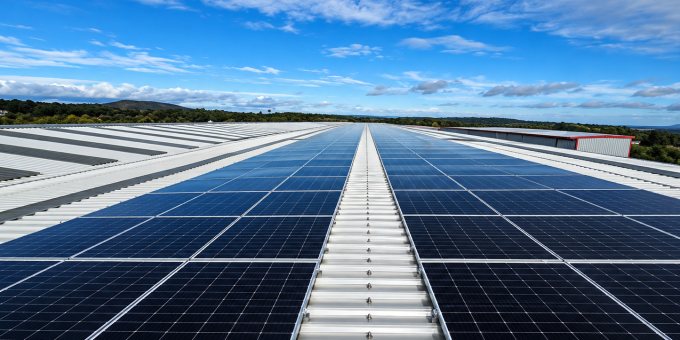
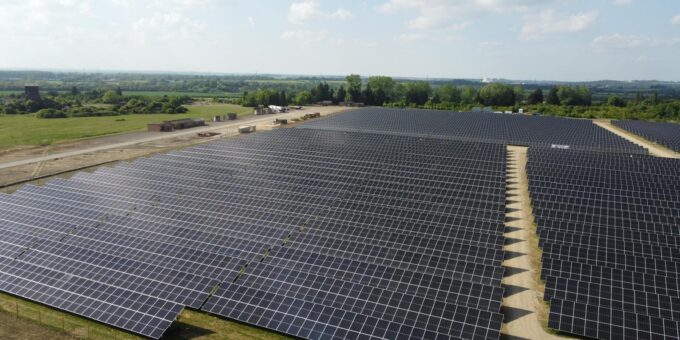
Syzygy is helping GSS Developments take the first steps into a long term plan to integrate renewable generation, electricity infrastructure and future electrification at a major new industrial and logistics development in Edinburgh.
Client: GSS Developments
Location: Newbridge, Edinburgh
Development: Approximately 700,000 sq ft of industrial and logistics space
First phase: 13 industrial units
Solar PV: 349.9kWp installed and energised
The challenge: More than putting solar on the roof
For developers of modern industrial and logistics space, rooftop solar presents a significant opportunity. But generating renewable electricity is only part of the challenge.
How that electricity is distributed, measured, supplied and charged to occupiers can be just as important as the infrastructure producing it.
At EDI Approach, a major new industrial and logistics development near Edinburgh Airport, GSS Developments recognised the importance of integrating renewable generation into a wider electricity strategy. Working with this forward thinking family business Syzygy helped to realise that ambition with the first stage of what promises to be a major roll-out.
The development will ultimately provide approximately 700,000 sq ft of industrial and logistics accommodation, with the first phase comprising 13 units.
With multiple occupiers, shared electricity infrastructure and the prospect of increasing demand from electric vehicles and other technologies, the challenge extended well beyond installing rooftop solar panels.
The solution: An integrated approach to energy
Syzygy Consulting is supporting GSS Developments in bringing together rooftop solar, electricity infrastructure and the commercial arrangements needed to manage energy across the site.
A 349.9kWp rooftop solar installation has now been installed and energised on the first phase.
Syzygy's involvement extends across several interconnected areas:
Solar PV and technical assurance
Supporting the solar strategy and providing technical due diligence through construction and commissioning to help ensure the installation meets the development's requirements.
Electricity infrastructure and distribution
Coordinating grid connection, private electricity network and metering arrangements to support the supply of electricity across the 13 industrial units.
Occupier electricity supply and billing
Developing the commercial arrangements and software-based billing processes needed to distinguish between grid electricity, solar generation consumed on site and surplus electricity exported to the grid.
These arrangements are being finalised to provide the landlord and managing agents with a practical framework for managing electricity consumption and recharging occupiers.
Planning for future electrification
Considering how the site's electrical infrastructure can accommodate changing occupier requirements, including charging for cars, vans and commercial vehicles.
Potential future battery energy storage is also part of the wider consideration of how generation, demand and available electrical capacity could be managed.
Long-term asset management
Establishing arrangements for ongoing solar monitoring, performance management and maintenance coordination, helping ensure the installation continues to deliver value beyond commissioning.
The bigger picture: Making renewable energy work commercially
One of the important considerations at EDI Approach is how renewable electricity can be managed across a multi-let development. This was one of the major considerations for GSS too.
A solar installation may generate electricity, but realising its value depends on the infrastructure and commercial arrangements through which that electricity is used.
By considering solar generation alongside private electricity distribution, occupier metering, billing and future demand, GSS is establishing a more coordinated approach to energy management.
The aim is to provide transparency for occupiers, practical processes for managing agents and a framework that can inform future phases of the development.
It also means that future electrification requirements can be considered within the wider energy strategy, rather than addressed independently as demand emerges.
Progress and next steps
The first phase's 349.9kWp rooftop solar installation has been installed and energised.
Syzygy continues to support GSS with the finalisation of electricity export arrangements, implementation of the occupier billing platform and establishment of ongoing solar asset management services.
As EDI Approach develops, the work provides a foundation for considering how renewable generation, electricity infrastructure and evolving occupier requirements can be managed together.
From solar installation to long-term energy value
EDI Approach illustrates an increasingly important consideration for commercial property developers and owners.
Installing renewable energy infrastructure is one step. Integrating that infrastructure into the way a property operates, serves its occupiers and responds to future energy demands is another.
By connecting technical delivery with commercial and operational considerations, Syzygy is helping GSS Developments take a more joined-up approach to energy across its industrial and logistics development.
Planning renewable energy infrastructure for a commercial property development?
Syzygy supports property owners, investors and developers from initial feasibility and energy strategy through technical delivery and ongoing asset management.